ServicesWater Softeners
Water Softeners in Rockwall, Set Up to Last
Hard water leaves scale inside your water heater, pipes and fixtures long before you see it on the shower glass. We size a softener to your actual hardness, install it cleanly and show you the simple upkeep that keeps it working for years.
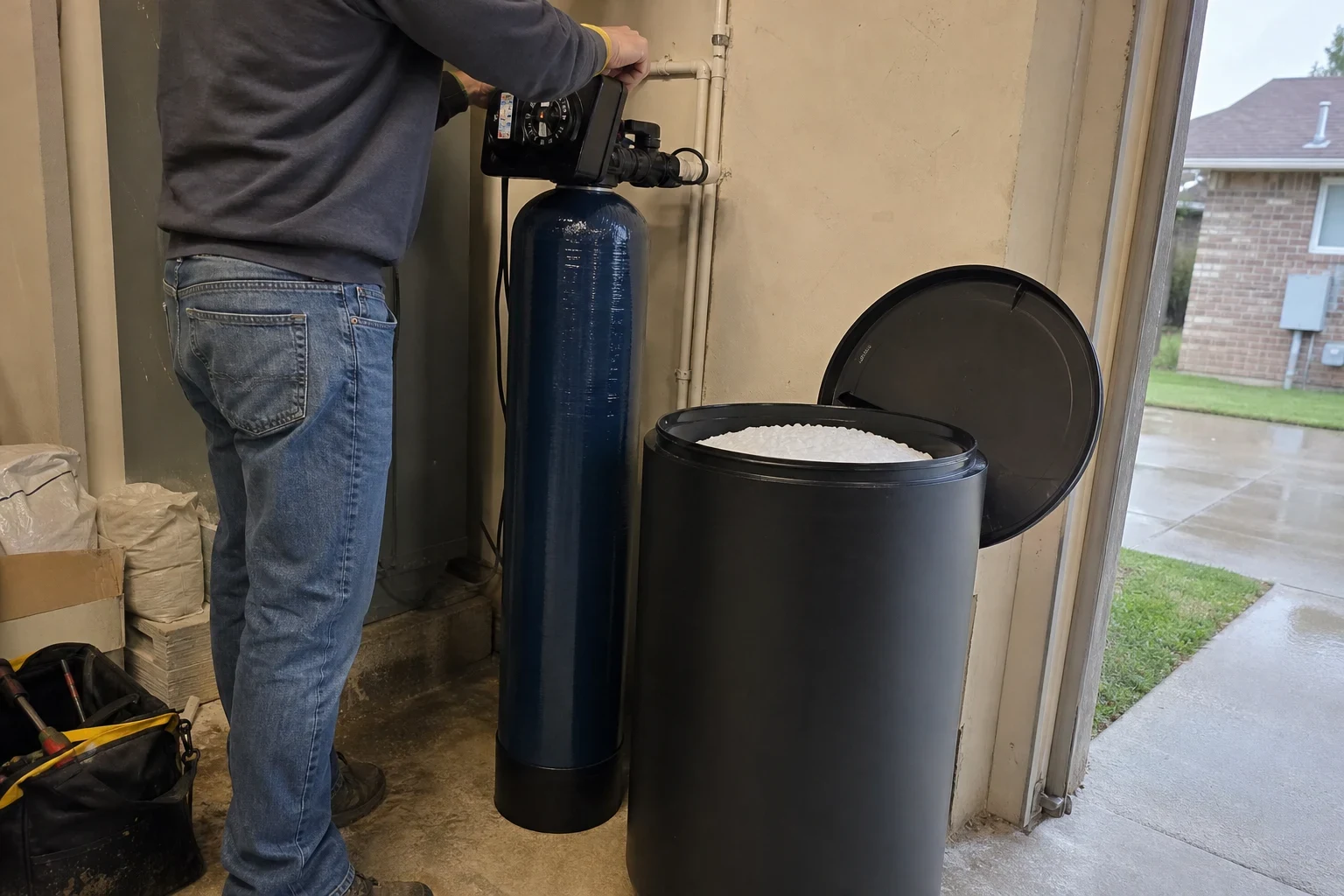
What a Softener Does for Your Home
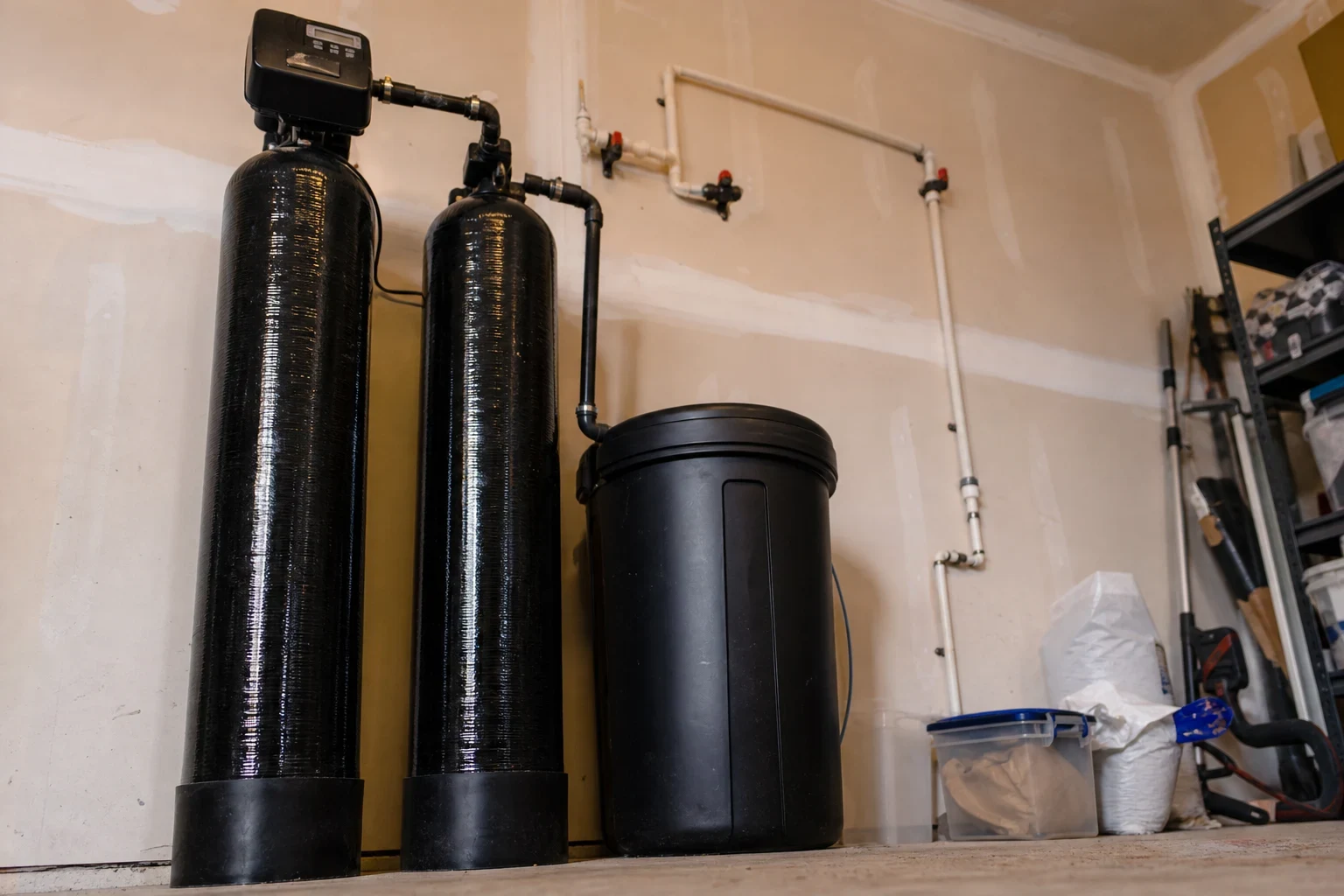
A water softener removes the calcium and magnesium that make water hard. Inside the tank, small resin beads trade those minerals for sodium as water passes through. Every so often the system flushes the beads with salty brine from a second tank, and the resin is ready to work again.
The payoff is mostly out of sight. Less scale means your water heater keeps heating efficiently, faucet cartridges and shower valves last longer, and your dishwasher and washing machine are not fighting mineral buildup. You also get spot-free glasses and soap that actually lathers.
A softener is only worth it if your water is hard enough to need one. That is why we start by checking your hardness and giving you a straight answer. If your reading is low and your real complaint is chlorine taste, we will point you toward whole-home filtration instead.
What Your Softener Installation Includes
- Sizing from your hardness reading
- We match grain capacity to your hardness level and how much water your household goes through. Too small, and the unit recharges far too often and eats through salt. Too large, and you pay for capacity you will never use.
- Placement and plumbing tie-in
- We connect at your main line or an existing softener loop, usually in the garage. We also add a bypass valve, so the softener can be taken out of service while the rest of the house keeps running water as usual.
- Brine tank and discharge line
- Each recharge sends rinse water to a drain, and that line gets a proper air gap. We level the brine tank, pour in the first salt and test the float and overflow before moving on.
- Programming the control valve
- We set the hardness value, regeneration schedule and time of day so the system recharges overnight while nobody is using water.
- An upkeep walkthrough
- Before we leave, we show you how to check salt, use the bypass and spot a salt bridge. Standard professional installation included for qualifying homes.
Signs Your Home Could Use a Softener
White crust on faucets and glass
Chalky rings around fixtures and a cloudy film on shower doors are mineral deposits left behind as water dries.
Spotty dishes and dull laundry
Glasses come out of the dishwasher hazy, and towels feel stiff even with plenty of detergent.
Soap that will not lather
Hard water binds with soap, so you use more shampoo and still feel a residue on your skin and hair.
Noise from the water heater
Scale that settles in the bottom of the tank can make it crackle and pop while it heats. That crust sits between the burner and the water like a blanket, so the heater runs longer and wears out sooner.
Fixtures wearing out early
If you are replacing showerheads, faucet cartridges or toilet fill valves more often than seems right, scale may be the reason.
What Moves the Price of a Softener
Every home's water and plumbing are a little different, so we quote after we know your hardness and see where the system will go. Your quote is written out by line so you know what each part covers.
System capacity
The more minerals in your water and the more people drawing on it, the more resin the system has to hold. Tank size follows from that, and it is usually the largest piece of the price.
Existing loop or not
Many homes have a softener loop already plumbed in. Without one, we need to cut into the main line and run new piping, which adds labor.
Control valve type
A metered valve regenerates based on water actually used and saves salt over time. A simpler timed valve costs less up front.
Drain and outlet location
If there is no drain or outlet near the install spot, extra line or routing work is part of the job.
How a Softener Job Goes
- 1
A phone call and a quote
Tell us what you are seeing around your home and how many people live there. We talk through options and set a time to check your water.
- 2
Your hardness reading
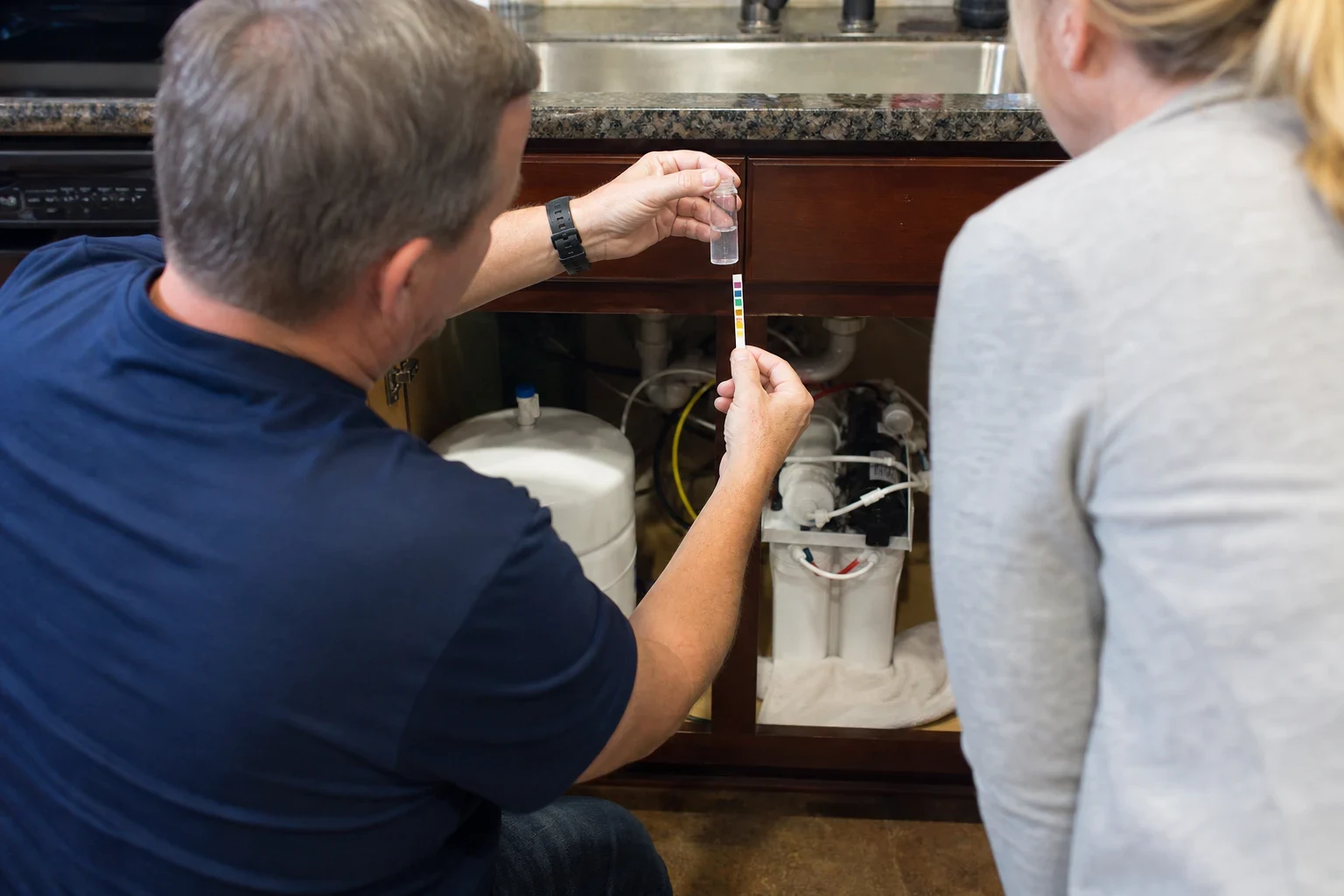
We check your water's hardness and share the result with you. If a softener is not a good fit, you will hear that from us plainly.
- 3
Install day
We lay down drop cloths, shut off the water, tie the softener into your main line and install the bypass and drain. Your water is off only for the stretch of time the plumbing work needs.
- 4
Startup and settings
We flush the system, run a first regeneration, program the valve and confirm soft water at the tap before we pack up and clean the area.
Water Softener Questions We Hear Often
Will softened water taste salty?
In most homes, no. The sodium added is small and tied to how hard your water was to begin with. If you would rather drink unsoftened water, a reverse osmosis system under the kitchen sink gives you a separate tap for filling glasses and pots.
Will a softener fix chlorine taste or smell?
Not really. A softener targets hardness minerals, not chlorine. If taste or smell is what bothers you, whole-home filtration is the better fit, and the two systems can be installed side by side.
How often do I add salt?
That pace is set by how hard your water is, how much your family uses each day and how big the brine tank is. Many people lift the lid once a month and pour in a bag when the tank is down to about a third. We show you what a healthy level looks like and how to break up a salt bridge if one forms.
Do homes in Rockwall really need a softener?
Some do and some do not. That is why we check your hardness first. The reading tells us whether a softener will protect your plumbing or whether your money is better spent elsewhere.
What upkeep keeps a softener running for years?
Keep salt in the brine tank, use clean softener salt, and have the resin and valve looked at if soft water starts fading. Simple checks like these keep the resin working and the valve from clogging.
Ready to Stop Scale Before It Builds Up?
Tell us what you are seeing at your faucets and water heater. We will check your hardness and walk you through a softener quote that fits your home.